20 PRO SUGGESTIONS FOR CHOOSING EICR INSPECTIONS IN TAMWORTH
Top 10 Tips On Assessing The Regulatory Compliance Of PAT in Tamworth
The UK regulatory framework for Portable Appliance Testing is fundamentally distinct from that of fixed electrical installations and fire safety equipment. Unlike fire extinguisher servicing, which operates under specific British Standards and third-party certification schemes, PAT testing is governed by a broader health and safety framework that emphasizes risk assessment and duty of care rather than mandatory periodic testing schedules. Electricity at Work Regulations, 1989, are the core legal requirement. They state that all electrical equipment (including portable devices) must be maintained in order to avoid danger. The Regulations are silent on how this should be done, nor do the regulations specify a testing schedule or methodology. In this case, it is up to the dutyholder to perform a thorough and adequate risk assessment and determine an appropriate inspection and maintenance regime. Compliance, therefore, is not evidenced by a stack of test certificates alone, but by a demonstrable process of risk-based decision-making, competent implementation, and thorough documentation that proves a systematic approach to ensuring electrical safety in the workplace.
1. Electricity at Work Regulations: 1989
Regulation 4(2) is the cornerstone of compliance for PAT testing. This states: As may be required to prevent harm, all systems are to be maintained so that they can be prevented, as far it is reasonable practicable. The regulation imposes a duty of care on employers and their duty holders. The term "system" includes portable appliances. In addition, the regulations are not specific about "PAT" testing; rather, they refer to "maintenance," meaning a more general concept, which encompasses visual checks, user tests, and combined testing and inspection. The frequency and type of maintenance required are determined by the risk assessment, not by a fixed legal timetable.
2. Act 1974 – Role of Health and Safety at Work Act 1974
The Health and Safety at Work and Other Legislation Act 1974 establishes general obligations employers have to employees and others. The 1974 Act is the main legislation which establishes employers' general duties towards their employees and other people. In section 2 of the Act, employers are required to provide, as far as it is reasonable, for the health, safety, and welfare of their employees. Electrical equipment is included in the safe operation of electrical systems and plant. In Section 3, this duty extends to those not under their employment such as visitors and contractors. The PAT process is the best way to fulfil these duties because it is structured and provides a method for ensuring safety of electrical equipment.
3. Code of Practice of IET for the In-Service Testing and Inspection of Electrical Equipment
Even though it is not a legal document, the Institution of Engineering and Technology Code of Practice has become the standard for best PAT test practices. It offers detailed advice on how to create a maintenance regime that is compliant.
Definitions of appliance categories and types.
Procedures for inspection and testing combined with formal visual inspections.
Based on equipment type and environment, the recommended initial inspection and testing frequencies.
Pass/fail criteria for test results.
Courts and Health and Safety Executives inspectors will use the code to determine whether or not a dutyholder’s regime of maintenance is "suitable and sufficiently." A deviation from the code that is not accompanied by a documented and robust risk-based justification can be interpreted as non-compliance with the regulations.
4. Risk Assessment is the Priority
HSE advocates an approach based on risk for PAT testing. This is a departure from the outdated idea of annual blanket testing. The dutyholder must conduct a risk assessment to determine the need, nature, and frequency of inspection and testing. Key factors influencing this assessment include:
Equipment type: A double-insulated (Class II) appliance in a low-risk environment may only need a visual check, while a Class I appliance in a workshop may need regular formal testing.
Environment: Construction sites and warehouses are high-risk environments. Hotels and offices are usually lower risk.
Users: Are equipment users trained staff or members of the public?
Previous history: Is the appliance new or frequently damaged?
This risk assessment is what defines a compliant system, not the number of tests performed.
5. The Testers' Concept of "Competence
Regulation 16 of 1989's Electricity at Work Regulations requires that those who work with electrical systems have the technical knowledge and expertise to prevent danger. For PAT testing, "competence" does not necessarily require a formal qualification, but the tester must have:
Electrical knowledge is important.
Practical experience and understanding of the system they are working on.
Understanding the hazards involved and the precautions needed.
Ability to use test equipment correctly and interpret results.
While City & Guilds 2377 is a popular qualification that provides excellent training, competence can be achieved through other means. The dutyholder must be able to demonstrate that the person conducting the testing is competent.
6. Documentation and record-keeping requirements
The Electricity at Work Regulations (EWR) do not specifically require recording. The Regulation 29 does state that it can be a defence if you prove that you took all reasonable steps to avoid an offense. The primary proof of due diligence is comprehensive records. A compliant records-keeping system includes:
The asset register is a list of all equipment.
Record of the risk assessment, and the maintenance plan that results.
Detailed reports are provided for each formal test and inspection, which include the following: appliance description and details, test results and pass/fail grades, next scheduled test date and tester identification.
HSE or the local authorities can easily access these records.
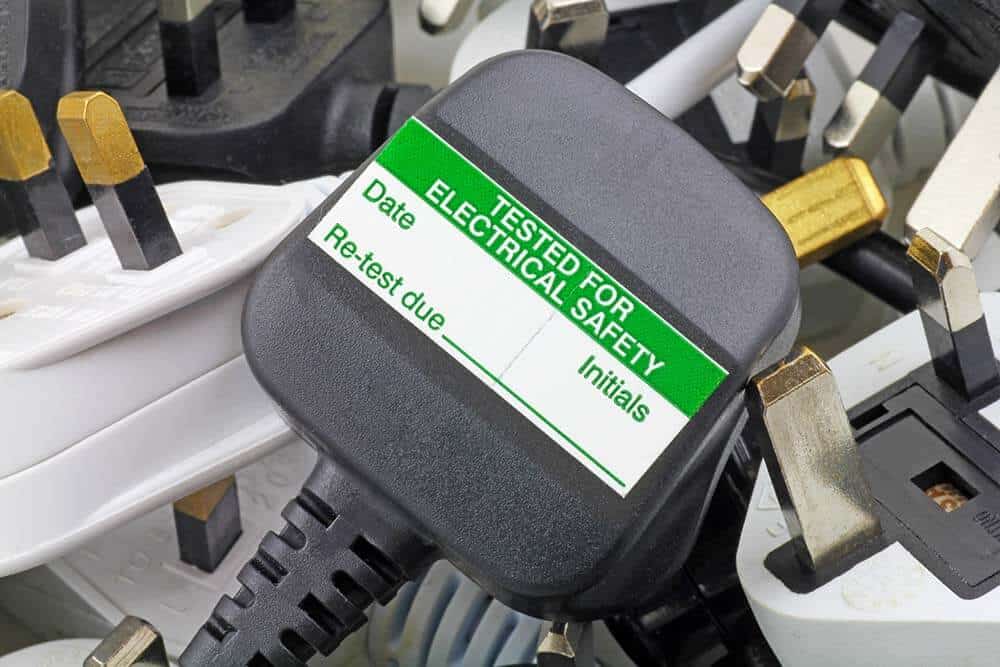
7. Labelling and identification of appliances
Effective labelling is essential to a compliance PAT system. Each appliance which has undergone an official combined inspection/test should be labelled:
The unique ID number of the asset that links it to the record.
The test date.
The date for the next test (or re-inspection).
The name or identifier used to identify the tester.
The label provides a clear visual indicator of an appliance's compliance status for users and inspectors. Labels should not be metallic or conductive, but durable.
8. The HSE's Enforcement stance and "Myth-Busting"
The HSE has actively worked to clarify misconceptions about PAT testing. They stress that:
There is no legal requirement to have an annual test for all equipment.
Businesses can conduct their own testing if they have competent staff; there is no legal requirement to use a third-party contractor.
Visual inspections are often more important than testing electronically and can identify most faults.
An enforcement official will consider a risk-based strategy. A company that tests its equipment without any support in the form of a risk assessment will be seen as less favourably by an enforcement officer than one who can demonstrate a more robust risk assessment and justify a longer interval between testing for equipment with low risks.
9. PUWER: 1998 – Interaction with other Legislation
The Provision and Use of Work Equipment Regulations 1998 (PUWER) also applies to portable appliances. PUWER specifies that the work equipment used must be appropriate for its intended usage, maintained in a state of safety, and inspected periodically to ensure its safety. Regulation 6 specifically requires inspections where safety is dependent on installation conditions. PAT testing is a way to fulfill PUWER’s maintenance and inspection requirements of electrical equipment.
10. Due Diligence in Insurance
Insurance companies can have their own requirements, even though the law is based upon risk assessment. A policy may stipulate that PAT testing is conducted annually by a third party as a condition of coverage. Failure to adhere to this could invalidate a claim. In the event of a serious electrical accident, insurers and HSE inspectors will first examine the dutyholder’s PAT test records and risk assessments. The best evidence for due diligence is a well-documented and risk-based management system. This will also provide a strong defense against prosecutions or invalidated insurance claims. Check out the recommended Tamworth electrical equipment testing for blog recommendations including fire extinguisher fire, fire extinguisher company, fire extinguisher testing, fire extinguisher for an electrical fire, fire extinguisher using, fire extinguisher servicing, electrical fire extinguisher, electrical fire, fire extinguisher service near me, electrical extinguisher and more..
Top 10 Tips To Help Customer Support In The Fire Extinguisher Service in Tamworth
In the highly-regulated area of fire safety, support for customers goes beyond conventional service interactions. It becomes an essential component of legal compliance and risk management. The quality of customer support is an important factor in determining the ability of the Responsible Person to effectively manage documents and to respond quickly to safety-related concerns. A high-quality customer service system acts as the core of the service contract. It organizes scheduling, handles emergencies, interprets compliance requirements and keeps a flawless audit trail. It could mean the difference between a supplier that performs annual fire safety checks to finding a genuine partner who will take on the responsibility for fire safety. Evaluating support structures–including communication channels, account management, technical expertise, and problem-resolution protocols–is therefore essential for selecting a provider who can deliver not just technical competence but comprehensive peace of mind.
1. Access to Call Centres or Dedicated Account Access
The customer support structure is fundamental. The dedicated model for account management lets you identify a person who is aware of the specific needs of your business, as well as its history as well as the Tamworth. This individual has an in-depth understanding of your agreement and can address issues, schedule appointments and handle queries without repeating the same information. The typical call centre, in which each agent has their own unique style and has different communication styles, can cause breakdowns in communication. Information exchanges are frequent and accountability is not there. A dedicated account manager for companies with complex requirements or multiple sites is not a choice but is a must to simplify the management of compliance.
2. Multi-Channel Support and Guaranteed Response Time in Tamworth
Modern customer service should be available through a variety of channels that are able to accommodate various needs or preferences. It should be a phone number, email support and often a customer portal that allows 24/7 access to customer documents, service history as well as other details. Each channel must have a Service Level Agreement (SLA) that defines the time for responding. A service provider can guarantee that an email response within two hours during working hours, or a telephone call within 30 minutes from the support desk. These specific commitments stop queries from being lost in a sea of confusion and ensure timely support for compliance-related questions.
3. Technical Support as well as Compliance Advisory Services in Tamworth
A team of support experts with high-end capabilities provides solutions that go beyond just administrative assistance. This includes technical and compliance advice. Your contact person will be able to answer complex questions about British Standards (BS 5306-3) and provide guidance on the kind of extinguisher appropriate for the specific risk, or interpret recommendations from an Fire Risk Assessment. To achieve this, your support personnel need to be well-trained in regulatory changes and kept up-to date on them. The support function is transformed from a simple scheduler into an essential tool for meeting your obligations as a responsible person.
4. Online Customer Portals and Digital Document Management in Tamworth
A strong online portal is a hallmark of a forward thinking provider. The platform should enable users to view your entire service history in real-time and at all times seven days a week, in addition to your asset register and invoices. Additionally, it should allow you to report problems or schedule non-urgent visits and see due dates for service. This digital transparency gives you the ability to manage your evidence of compliance easily. It also gives you immediate access to the documentation during an audit by the Fire Authority, or during inspections by insurance companies.
5. Communication and service reminders in Tamworth
The best support is proactive and not reactive. The company should take the initiative to remind you of scheduled services, typically about 4-6 weeks prior, and guide you through the booking process. They should also inform your staff to regulatory changes and scheduling changes that could impact equipment. When an engineer has visited Support should provide you with the report of service and note any action required by you (e.g. approuving the purchase of a unit) to ensure that there is no oversight and that the compliance of your equipment is maintained.
6. Complaints and Escalation Procedures in Tamworth
An open and formal complaint procedure is a key indicator of a professionally run organization. The steps must be documented and clearly outlined, starting with a basic report, then moving to a complaints manager who will escalate the matter to the top management, if needed. The procedure should contain an acknowledgement timeframe and resolution. Transparency is an indication that the provider is confident in their ability to manage complaints efficiently and fairly.
7. Clearness in billing and Administrative Assistance in Tamworth
Customer service should also provide transparent, clear and helpful administrative billing support. The support team must be able answer billing questions quickly, clarify the details of invoices, and also clarify the terms of contracts. The team must be able provide clear, detailed invoices that correspond with the work that is formally certified by the report of service. Customers often get frustrated due to confusion about billing. An experienced support team who can answer these queries quickly and politely will ensure an ongoing, seamless partnership.
8. Feedback Loops for Customers and Continuous Improvement Mechanisms
A business that is committed to excellence will have formal methods for collecting and acting on feedback from customers. It goes beyond simply asking a customer for a feedback. It includes structured questionnaires after significant service interactions, a regular business review to discuss performance in relation to SLAs, along with demonstrable evidence of how the input received from customers has led to improvement in service. This closed-loop system shows the company's commitment to improving its service by taking into account feedback from customers.
9. Train and empower personnel in support in Tamworth
The training and empowerment provided to staff will determine the performance of the support team. Support staff need to be trained thoroughly not just on the firm's internal procedures but also the basics of fire safety regulations and British Standards. Additionally, they should have the capacity to take important decisions without needing approval from various levels of management. For instance, they could approve a replacement for an extinguisher. This empowerment results in faster resolutions and more flexible services.
10. Cultural Fit and Quality of Interaction in Tamworth
In the end, it is crucial to take into account the element of cultural fit. The staff supporting the customers should be patient, polite and compassionate. They must also understand that the Responsible Persons may be under pressure to enforce compliance. The experience for the customer is determined by the manner in which the interaction is handled and the willingness to help and build a good rapport. A provider whose support team is a pleasure to deal with will significantly ease the administrative burden of ensuring fire safety compliance. Have a look at the best fire extinguisher servicing in Tamworth for website info including fire service fire extinguisher, fire extinguisher fire extinguisher, extinguisher testing, a fire extinguisher, all about fire extinguisher, fire extinguisher service Tamworth, fire extinguisher testing, fire extinguisher testing, extinguisher company, fire extinguisher and more. More broadly, see the top rated eicr inspections for more.